During the two weeks of the public service ad, people saw social advertisement on TV, radio, cinemas and on the streets of cities. The campaign addressed the people and institutions surrounding the victims of violence: friends, mothers, police officers, child rights protection staff, judges, and priests. According to a new survey, persons from these groups would express victim blaming most often and hold on women from looking for further help.
The video as well as the posters have quotes attributed to every character that were taken from real interviews with the victims of violence: women told that these were the words they would hear from the priests, police officers and others when they were trying to reach for help.
“With this ad, we do not seek to discredit any of the institutions or groups of society”, says the Equal Opportunities Ombudsperson Agneta Skardžiuvienė. “We wish to show how deep victim blaming has taken roots in our culture and society. We invite people to unite and to cooperate in order to bring back the liability to the real culprit – the abuser”.
Despite the importance of the issue, the reception has been critical due to the characters shown in the posters and video. The representatives of priests, the police and the Ministry of Social Security and Labour were feeling attacked by the campaing but did not raised any discussion on their role reducing victim blaming in the aforementioned institutions.
Also, this public service ad is part of President Dalia Grybauskaite’s nationwide social campaign “For A Safe Lithuania”.
VIDEO
(English, French, German, Spanish, Polish and Russian subtitles available)
POSTERS
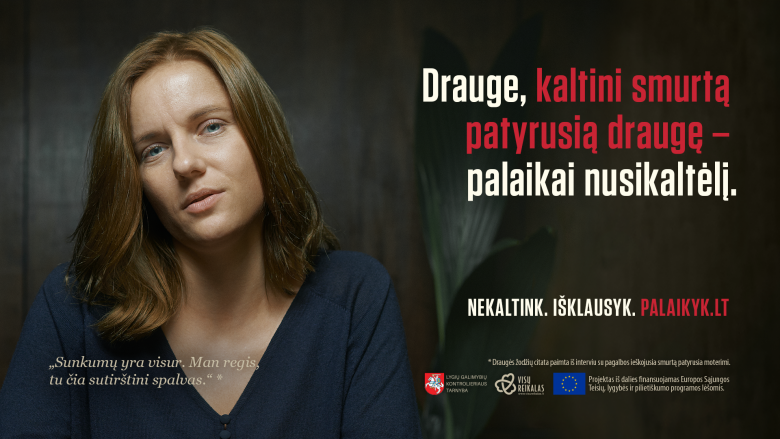
“Blaming the victim means supporting the offender”, says the posters that were disseminated all around Vilnius, Kaunas and other Lithuanian cities. The quote of the friend says “Difficulties are everywere. I think you are exaggerating”. Asterisk next to the quote explains that the citation is real and taken from the interview with a victim.
The quote of the priest says “Family is the most precious thing. You must listen to your husband”.

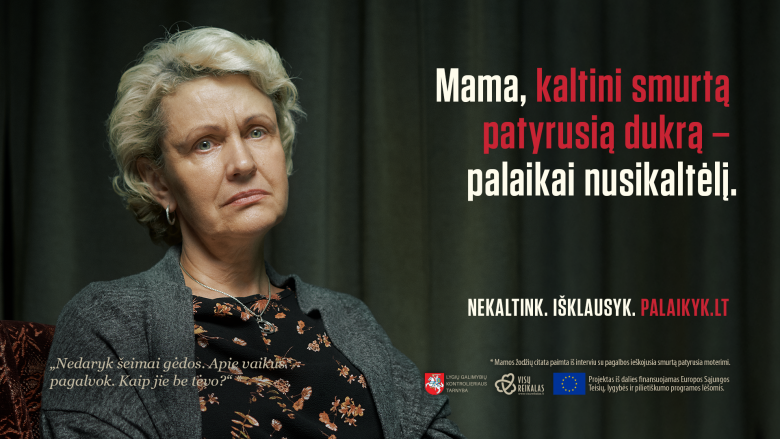
The quote of the mothers says “Don’t bring the shame to your family. How will the children do without a farther?”
The quote of the police officer says “What did you tell him? Perhaps you provoked him?”

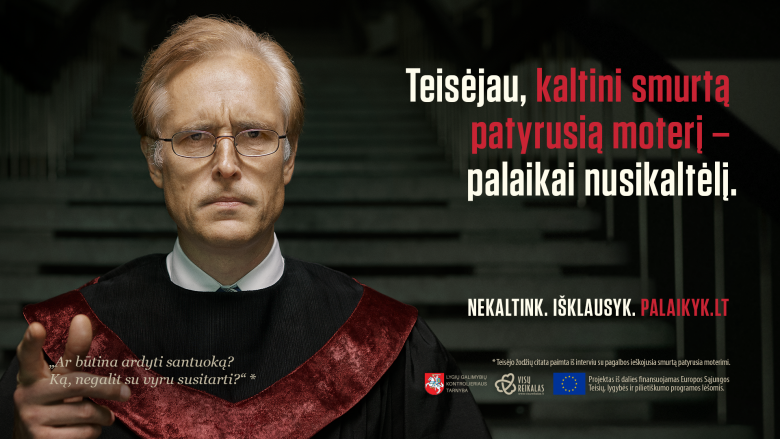
The judge is blaming with questions “Do you really need to destroy your marriage? Can’t you talk to your husband?”.
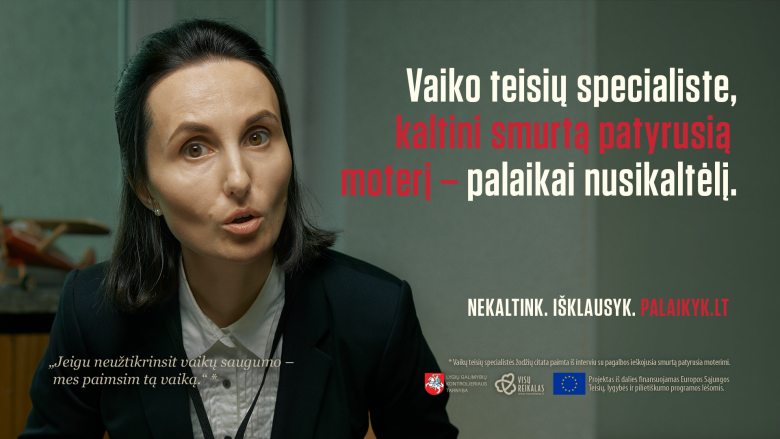
The quote of the child’s right specialist says “If you are not able to secure children’s safety, we will take them away”.